
We’ve Seen This Before
Why Minnesota feels like history repeating

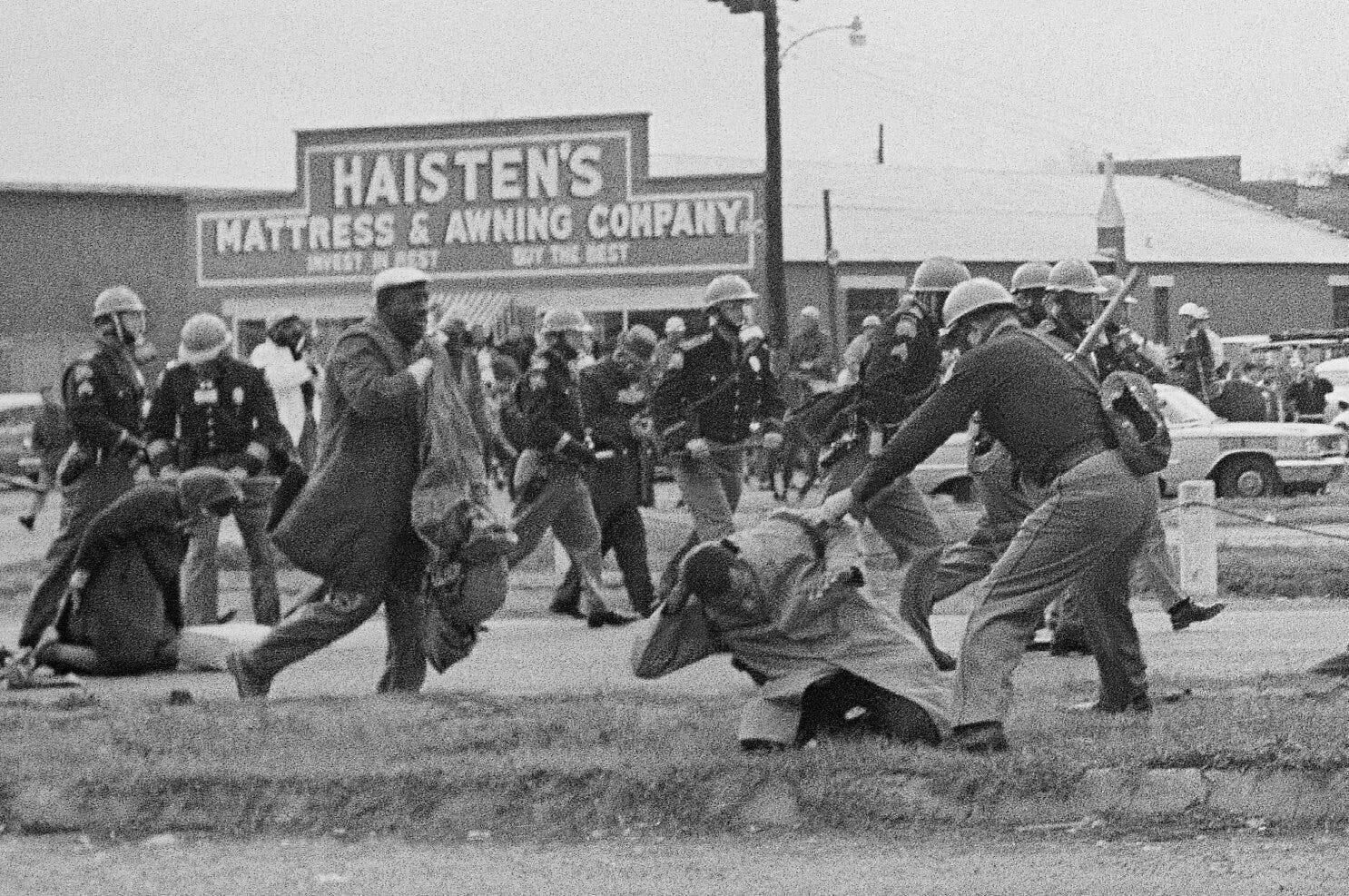
Yesterday I had the privilege of sitting down with author and historian Lisa Sharon Harper and Pastor Kristian A. Smith. We talked about race and the United States—about how we’re still fighting the Civil War, just with different uniforms and better PR.
Early on, I asked them both the question a lot of us are asking right now: what in the world is happening?
Pastor Smith didn’t hesitate. He said, in so many words: nothing that the Black community hasn’t been saying for decades. He talked about how the tactics aren’t new—how surveillance, intimidation, “random” stops, and state violence have long been normal in Black neighborhoods. And now, he said, white America is tasting the same machinery—the same casual use of force, the same assumption of guilt, the same state posture that says, you don’t get to ask questions while we do this.
As hard as that truth was to hear, Lisa followed it with something that stopped me cold:
“If you want to know what it was like to live in the post-Reconstruction South, it’s happening in Minnesota right now.”
And I haven’t been able to shake it.
When you look at what’s unfolding in Minnesota—the surge of federal immigration agents, the confrontations, the fear, the blurred lines between “immigration enforcement” and occupation—it’s not just chaos.
It’s a lesson. A warning. And for a lot of white Christians in particular, it’s an exposure.
The lie we were sold: “This is about criminals.”
Whenever federal crackdowns like this ramp up, we’re given the same explanation.
It’s targeted.
It’s necessary.
It’s for public safety.
DHS and ICE keep saying they’re focused on “the worst of the worst.” Violent offenders. Serious threats. People we’re supposed to feel safer without. But that story only works if we’re willing to accept a much bigger assumption: that whole communities can be treated like suspects.
Once that assumption is in place, everything else becomes easier. Stops feel justified. Detentions feel routine. Raids start to look like policy instead of disruption.
However, the numbers quietly tell a different story.
According to DHS’s own records, most of the people being swept up in these raids don’t have violent criminal histories. Many don’t have criminal convictions at all. Some haven’t even been charged with anything.
If this were primarily about public safety, the data would reflect that. It doesn’t. What it reflects is something else: a system designed to cast a wide net, not a careful one.
That kind of enforcement isn’t about precision. It’s about control. And control in this country has never been neutral. It has always been shaped by race, by history, by who is seen as belonging and who is seen as a problem to manage.
When the state is given permission to treat identity as suspicion, the goal stops being safety and starts being sorting. Who stays. Who goes. Who gets protection. Who gets policed.
That’s the power being exercised here.
Not just the power to enforce the law, but the power to reshape the country’s boundaries—socially, culturally, and demographically—toward an older vision of who America is for.
The language of “criminals” makes that easier to sell. It flattens real people into categories. It turns neighborhoods into targets. It makes sweeping actions feel reasonable instead of intrusive.
But when you look at who is actually being caught in those sweeps, the story starts to unravel.
This isn’t a narrow response to danger.
It’s a broad assertion of authority.
And that authority has always fallen hardest on Black and Brown communities first.
What’s new isn’t the tactics.
What’s new is who is finally being forced to notice them.
What “post-Reconstruction” means in plain language
When Lisa said “post-Reconstruction South,” she wasn’t talking about a chapter in a history book. She was naming a pattern.
Because what happened after Reconstruction wasn’t just a clean break from the past. Slavery ended, but the way power worked didn’t. Control didn’t disappear. It just changed shape.
Instead of chains, there were laws.
Instead of ownership, there was surveillance.
Instead of open violence, there was “procedure.”
The harm didn’t go away. It just got paperwork.
So when I hear “post-Reconstruction South,” I don’t think about something distant or abstract. I think about what it looks like when the state starts moving through certain communities with very little restraint. When people are treated as suspicious because of how they look, where they live, or the language they speak. When rights technically exist, but don’t actually protect you once the system decides you’re a problem.
And I think about how institutions usually respond to that kind of moment. They don’t rush to challenge it. They try to stay out of the way. They comply. They hope it doesn’t come for them.
That’s the atmosphere a lot of people are describing in Minnesota right now. Civil rights groups and local officials are raising concerns about aggressive tactics, racial profiling, agents operating without clear identification, and enforcement that feels more like intimidation than public safety.
Nothing about that feels new if you know the history. The details change. The language changes. The uniforms change. But the structure stays familiar: state power aimed at people defined as outsiders, and everyone else watching to see how far it’s going to go.
That’s why what Lisa said stuck with me. Because it didn’t feel like commentary on the past. It felt like a description of the present.
To the white evangelicals who voted for this
I’m going to say this plainly, because gentle language is part of how we ended up here.
If you are a white evangelical who voted for this administration and you’re shocked by what you’re seeing in Minnesota right now, let’s be clear about something:
This was the point.
This isn’t an unfortunate side effect. This is the outcome you gave permission for.
You weren’t voting for “family values.” You were voting for a version of order that always needs a target. And you were willing to believe — because it made you feel safe — that the target would only ever be “those people.”
But here’s what that looks like in real life.
It looks like a teenager at a Target in Richfield — a U.S. citizen — being handcuffed by federal agents, thrown into an unmarked car, driven miles away, and then dumped outside a Walmart like he was nothing more than an inconvenience. No charges. No explanation. Just intimidation and control.
It looks like two U.S. citizens being forced to the ground inside that same Target, detained by ICE agents without a warrant, and only released after public pressure and media attention.
It looks like three enrolled members of the Oglala Sioux Tribe — U.S. citizens by law and citizens of their Nation by treaty — being arrested at a Minneapolis encampment and taken into ICE detention. Their own tribal government had to step in just to get them released.
It looks like a woman walking down a public street, asking a simple question about whether agents were ICE, and ending up tackled, handcuffed, and held for hours with no charges.
It looks like a man trying to calm a tense situation during a traffic stop, only to be grabbed, thrown to the ground, and detained anyway — even though he hadn’t done anything illegal.
It looks like Renee Good, a 37-year-old mother and poet, shot and killed by an ICE agent in Minneapolis. Federal officials called it self-defense. Local leaders, eyewitnesses, and civil-rights attorneys called for accountability. Multiple federal prosecutors resigned rather than be part of how that case was handled.
These aren’t statistics.
These are people.
And none of this fits the story you were told about “the worst of the worst.”
Some of the people being swept up are citizens.
Almost all have no criminal record.
Most were just living their lives.
Some were teenagers going to work.
Some were tribal members on their own land.
But you voted for a system that treats certain bodies as disposable in the name of “order.” That wasn’t accidental. That was the design.
And now you’re watching what Black and Brown communities have been saying for generations: once the state learns it can ignore its own limits, it doesn’t stop. It expands. It pushes. It tests how much it can get away with.
The worst part?
A lot of white Christians are still trying to baptize this. They quote Romans 13 while masked agents handcuff kids. They talk about “respecting authority” while tribes have to beg for the release of their own people. They call it “law and order” while citizens get thrown into cars and dumped miles from home.
History has a word for that posture.
It isn’t “biblical.”
It isn’t “patriotic.”
It’s complicity.
If you’re finally starting to see it — if something in your gut is telling you this is wrong — don’t slip away quietly.
Leave.
And leave loudly.
Say why.
Name what’s happening.
Talk about it in your churches, your families, your friend groups.
We are willing to work with you. We are willing to build something better with you. But you don’t get to stay silent while benefiting from the harm you helped authorize.
If you want to help undo what you gave permission for, it starts with using your voice.
Not your excuses.
Not your theology.
Your voice.
For everyone else: clarity, and the kind of hope that doesn’t lie
If you’re watching this and feeling that disorienting mix of rage, grief, and “am I overreacting?” — you’re not.
This isn’t hysteria.
It’s pattern recognition.
What’s happening in Minnesota isn’t just a collection of chaotic headlines. It fits a pattern that Black and Brown communities have been naming for generations — and now more people are seeing it up close.
The hope I see isn’t a thin kind. Not the “it’ll all be ok” kind or a version of hope that doesn’t ask anything of us.
The kind of hope that actually matters right now looks different.
People are documenting what’s happening.
Journalists are reporting specific, concrete stories.
Civil rights groups are filing lawsuits.
Cities and states are pushing back in court.
None of that magically fixes what’s unfolding. None of it makes the harm disappear. But it does mean something important:
We are not helpless.
We are not alone.
And we are not imagining this.
There are people refusing to let this be reduced to spin. There are communities pushing back against the idea that this is just “how things are.” There are legal, civic, and cultural forces saying this deserves scrutiny, not silence.
That doesn’t make the moment easy.
It just makes it honest.
And honest is a place you can actually build from.
We can’t pretend the story is over
I keep coming back to what Pastor Smith said: white America is now experiencing what has almost always plagued Black Americans. That doesn’t mean we’re all equally vulnerable. It means the cover story is gone.
And I keep hearing Lisa’s words like a bell I can’t unhear: If you want to know what it was like to live in the post-Reconstruction South, it’s happening in Minnesota right now.
If that’s true, then the real question isn’t “how bad will it get?” The real question is:
How much permission are we still willing to give it?
Because this doesn’t end with one raid.
Or one lawsuit.
Or one news cycle.
It ends when enough people refuse to normalize it.
Refuse to shrug at it.
Refuse to let “order” become the word we use for cruelty.
And if you’re a Christian — especially a white Christian — here’s the honest line in the sand:
You don’t get to sing about Jesus “setting captives free” while cheering the cages.
You don’t get to call yourself pro-life while blessing state power that treats human beings like disposable problems.
And you don’t get to claim you didn’t know.
You know now.
The only question left is what you’re going to do with that knowledge.
Yes — and that’s what makes it so chilling. The images change, the uniforms change, the slogans get updated, but the mechanics are the same every time: state power framing dissent as disorder, then using “order” as justification for brutality.
What history keeps teaching us is that this doesn’t start with mass repression — it starts with normalization. With people being told this is “necessary,” that it’s about safety, that those being beaten somehow brought it on themselves. And once that logic settles in, the line keeps moving.
The warning signs aren’t subtle. They never are in hindsight. The real question is whether enough people recognize the pattern early enough to refuse it — loudly, collectively, and without pretending this is just another bad news cycle.