
The Beloved Community
Go and Do the Same

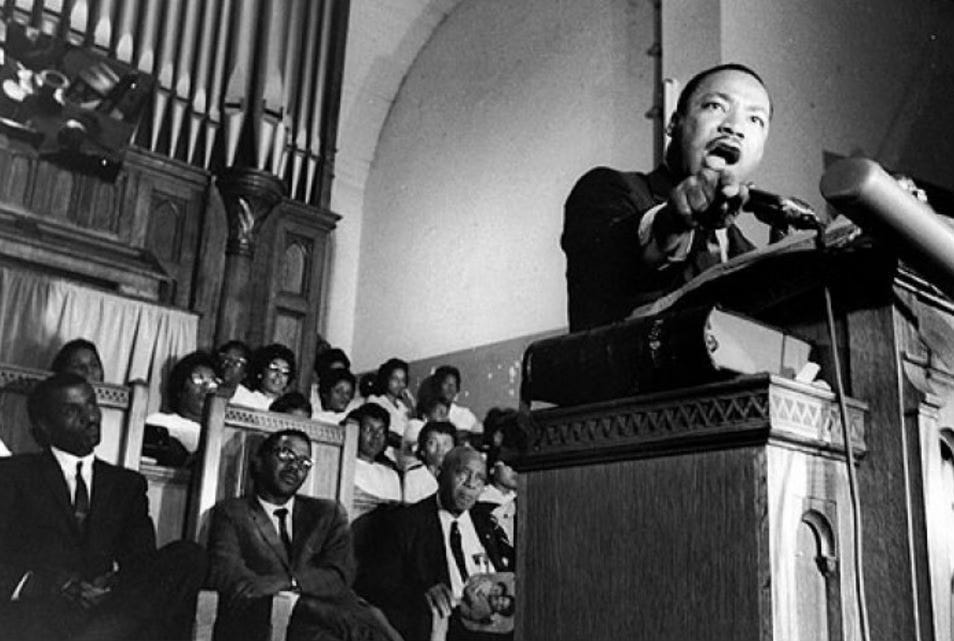
This is final week of a three week series called The Beloved Community the I preached through at my church. My hope is that it brings you clarity and some hope in this dark season.
We’ve been walking together through this series called The Beloved Community, and from the beginning we’ve been holding onto one core truth: You cannot heal what you will not name. And because of that, over the past 3 weeks we have named some hard realities.
Week one, we sat with Jesus in his hometown synagogue and talked about what happens when truth confronts comfort. We named that healing takes honesty, and that clarity doesn’t always feel calm—it often feels disruptive. We said: When truth confronts comfort, we choose where we stand.
Last week, we met John the Baptist in the wilderness and talked about disruption as preparation. About repentance not as regret, but reordering, about faith that shows up in real life—in how money moves, how power is used, and how people are treated. And we named it plainly: if nothing is being disrupted, nothing is being prepared.
Today, we bring it all together.
Our text comes from Luke chapter 10—what we often call the story of the “Good Samaritan.” And I want to pause there for just a moment, because that label doesn’t actually come from Jesus. He never calls him “good.” That’s something we added later, as a section header, as a way of organizing the story. And here’s why I brought it up.
Because when we call him the good Samaritan, it can subtly turn this into a story about exceptional morality—about one person being one of the “good ones.” And for many people, especially marginalized people, that kind of framing lands differently. It suggests that dignity must be earned through behavior. That having compassion then makes someone worthy of care. And as a majority white church, I think it’s important that we slow down long enough to notice how those narratives travel.
Jesus isn’t telling a story about one of the “good” ones. He’s telling a story about presence. He’s telling a story about what happens when someone refuses to let a wounded body remain invisible.
And I want to be clear right from the start: this story is not about being nicer. It’s about interrupting systems of neglect with embodied responsibility. Jesus refuses hypothetical ethics. He demands proximity. Which is why the truth that’s going to confront our comfort today is: Healing begins when we refuse to pass by.
The Question “Who Is My Neighbor?” Is a Way to Limit Responsibility
Luke 10:25-29 25 One day an expert in religious law stood up to test Jesus by asking him this question: “Teacher, what should I do to inherit eternal life?” 26 Jesus replied, “What does the law of Moses say? How do you read it?” 27 The man answered, “‘You must love the Lord your God with all your heart, all your soul, all your strength, and all your mind.’ And, ‘Love your neighbor as yourself.’” 28 “Right!” Jesus told him. “Do this and you will live!” 29 The man wanted to justify his actions, so he asked Jesus, “And who is my neighbor?”
The story begins with a lawyer asking Jesus what he must do to inherit eternal life. Jesus invites him to answer his own question, and the man responds correctly: love God with everything you have, and love your neighbor as yourself. Jesus affirms him. “You’ve got it,” he says. “Do this and you will live.”
Can we just pause here for a quick moment and acknowledge the fact that Jesus just said the things you need to do to inherent eternal life (whether that be here and now or later...b/c it can mean both) is love God and love your neighbor as yourself. I’m not saying that’s always easy, but that’s it!
Back to the story. The lawyer, wanting to justify himself, asks, “And who is my neighbor?” I think one of the mistakes we make when we read or listen to these stories we’ve heard a million times is we miss small things. Like this question. We blow right by it b/c many of us already know it or are at least familiar enough with the story to just keep on going. That little question is a detail we cannot overlook here.
The lawyer is not confused. He already knows the command. What he’s doing now is looking for edges. He’s trying to clarify the limits. And that question may sound harmless. It may sound thoughtful. Maybe even spiritual. But it’s doing the same thing that many people in our country are doing right now.
“Who is my neighbor?” is a way to draw boundaries. It’s a way to manage responsibility. It’s asking where obligation ends. It’s searching for categories instead of closeness.
We ask it when we start negotiating how close we’re willing to get.
We ask it when we feel compassion rising but quickly calculate what it might cost us.
We ask it when we notice someone’s pain and feel the instinct to pull back instead of lean in.
We ask it when we begin measuring whose suffering feels familiar enough, safe enough, personal enough to matter.
And I don’t say that to shame us. I say it because this is deeply human.
We are wired to conserve energy. To protect ourselves. To stay with what feels known and manageable. Especially in seasons like this—when the news is relentless, and harm feels constant, and compassion fatigue is real—we start building quiet boundaries around our hearts. Not because we’re cruel. Because we’re tired.
So, we begin to narrow the circle of who we feel responsible for. We look for exceptions. We look for reasons not to get involved. We look for definitions that let us stay at a safe distance. I think that’s what the lawyer is doing. Don’t forget that he too is living under occupation by the brutal Roman Empire. If you think we’re feeling it, imagine walking down streets lined with crosses full of people dying slowly. So let’s not be too quick to judge this young lawyer.
He’s not rejecting love. He’s trying to contain it. He’s asking Jesus to help him draw the lines. And Jesus refuses. Because Jesus knows that once you start defining neighbor by category—by proximity, by similarity, by deserving—you’ve already begun to lose the heart of the command.
So instead of answering with a definition, Jesus tells a story.
Jesus Refuses to Define Neighbor by Category
Luke 10:30-35 30 Jesus replied with a story: “A Jewish man was traveling from Jerusalem down to Jericho, and he was attacked by bandits. They stripped him of his clothes, beat him up, and left him half dead beside the road. 31 “By chance a priest came along. But when he saw the man lying there, he crossed to the other side of the road and passed him by. 32 A Temple assistant[b] walked over and looked at him lying there, but he also passed by on the other side. 33 “Then a despised Samaritan came along, and when he saw the man, he felt compassion for him. 34 Going over to him, the Samaritan soothed his wounds with olive oil and wine and bandaged them. Then he put the man on his own donkey and took him to an inn, where he took care of him. 35 The next day he handed the innkeeper two silver coins,[c] telling him, ‘Take care of this man. If his bill runs higher than this, I’ll pay you the next time I’m here.’
A man is traveling from Jerusalem to Jericho. And I want us to pause there for a moment, because that road is not symbolic (Show Picture). It’s real. It’s about seventeen miles long, descending steeply from Jerusalem down into the Jordan Valley—narrow, winding, full of blind corners and rocky passes. In Jesus’ time, it was infamous for robberies and ambushes. People literally called it the Way of Blood. Everyone listening to Jesus would have known exactly what kind of road this was. Which means this man doesn’t wander into danger by accident—he’s traveling a road everyone knows is unsafe. And sure enough, he’s attacked, beaten, stripped, and left half dead.
A priest comes by. Then a Levite. Religious leaders. Temple workers. People who know Scripture. People who lead worship. People who would absolutely be considered faithful. And they don’t cause the harm. They don’t attack the man. They don’t steal from him. But they do something far more recognizable.
They keep going. Luke tells us they see him—and they pass by. And I want us to slow down here, because if we turn them into villains, we miss the point. These aren’t cartoon bad guys. These are people who likely believed they were making the safest, most reasonable choice in a dangerous moment.
Personally, I think they assumed it was a trap.
That road was infamous for ambushes. Everyone knew it. And we still know roads like that today. We’ve all heard the stories—someone stranded on the side of the highway late at night, or someone asking for help in a dark parking lot. We’ve been taught to protect ourselves. To stay alert. To lock the doors. To keep moving. Those instincts don’t come from nowhere. They come from living in a world that has taught us—over and over again—that kindness can be dangerous.
So maybe they told themselves, I can’t risk it. Maybe they felt that familiar tension between compassion and self-preservation. That moment where your heart pulls one way and your nervous system pulls the other. And I don’t say that to excuse them. I say it because this is where the mirror shows up.
None of us pass by suffering because we’re cruel. We pass by because we’re scared. Or tired. Or overwhelmed. Maybe b/c we already feel like we’re carrying too much, or we don’t know if we have what it takes to help or because it feels safer to stay in our lane and mind our business and hope someone else will step in.
And I want to be clear about something here: this isn’t Jesus telling us we have to do all the things all the time. That’s not sustainable, and it’s not faithful. We are finite. We need rest. We need boundaries. We need to know when to step back so we don’t burn out—and then step back in when we’ve caught our breath. That rhythm is so important.
But what Jesus is naming is something deeper than individual moments of exhaustion. He’s naming a pattern. And unless we’re willing to notice that pattern, we will never be able to step outside of it.
If we turn these religious leaders into cartoon villains, we miss the invitation of the story. We get to feel morally superior instead of spiritually honest. Jesus isn’t offering us someone to judge—he’s offering us something to recognize.
They don’t cause the harm. But they preserve it through inaction.
Then comes the Samaritan. And this is where the story becomes explosive. Because Samaritans were not just neighbors with different opinions. They were despised. Considered impure. Theologically wrong. Ethnically suspect.
Jewish communities believed Samaritans had corrupted their faith, intermarried with outsiders, and abandoned true faith. They didn’t worship God the right way. They didn’t hold the right Scriptures. They didn’t go to the right temple. They were the “wrong” religion. Outsiders in every way that matters.
So, when Jesus makes the Samaritan the one who stops, he’s not just flipping expectations—he’s dismantling them. He’s saying that the person who shows mercy is not the one with religious authority, not the one with the right theology, not the one who knows the law best. It’s the one willing to get close. Which should give us a massive clue about what’s most important to Jesus when it comes to living out this faith.
The Samaritan doesn’t offer distant compassion. He moves toward suffering, and he does it on the same dangerous road everyone else just avoided. He risks his reputation by being seen with a wounded Jewish man. He risks his safety by stopping in a place known for violence. He uses his own oil and wine to clean the wounds. He lifts the man onto his own animal. He pays for his care. He commits future resources. He even promises to come back. This is not casual kindness. This is embodied solidarity.
And this is where Jesus makes his point without ever saying it out loud: need—not similarity—determines obligation. Not shared beliefs. Not cultural comfort. Not religious alignment. Need.
Healing begins when we refuse to pass by.
Compassion Costs Time, Money, and Safety
The Samaritan’s compassion is not convenient. It costs him time. It costs him money. It costs him emotional energy. It costs him safety. Love that costs nothing changes nothing.
And we need to stop here for a moment, because this is where the story stops being symbolic and starts becoming uncomfortable. This is love with teeth.
Over the past few weeks, I’ve had several conversations—separate conversations—with people who don’t know each other. Each of them was a person of color. And without any connection to each other at all, they all said some version of the same thing to me: What you’re experiencing right now isn’t new for us.
They said, all this violence you’re seeing, that stress that just doesn’t leave? That’s just life. And it has always been that way. They said this has always been our reality. Sure, there have been moments of relief. Pockets of peace. Seasons where things felt quieter. But they have not known sustained comfort the way I have. The way many of us in this room have.
I need us to really hear that, to take that in... not as guilt or shame but as clarity. Because what feels like disruption to some of us feels like continuity to others. What feels like a crisis moment now has been a long, unbroken story for Black and brown and queer communities in this country.
Here me, compassion isn’t just about individual kindness. It’s about whether we’re willing to let someone else’s reality reshape our own.
Solidarity costs something. It costs us comfort... Certainty. It costs us the luxury of staying neutral. It means listening when stories don’t center me. It means believing people when they tell us about their lived experiences—even when it makes us uncomfortable. It means recognizing that proximity to pain changes you.
And yes—posting on social media matters. Naming injustice publicly matters. Marches matter. Rallies matter. Those things are part of how we show up. But solidarity doesn’t end there.
Solidarity also shows up in how we spend our money. In where we invest our time. In whose voices we amplify. In how we protect people when harm is happening. In whether we stay engaged after the headlines move on.
The Samaritan doesn’t just offer a moment of compassion and then disappears. He stays involved. He opens his wallet. He rearranges his plans. He commits future resources. He promises to come back.
This isn’t performative care. This is sustained responsibility. And this is where Jesus presses us. Because love that stays theoretical doesn’t heal bodies. Love that remains abstract doesn’t interrupt systems. Love that never costs us anything, never changes anything.
The Samaritan teaches us that compassion isn’t a feeling—it’s a practice. It’s what happens when we decide that someone else’s suffering matters enough to reshape our own lives.
Healing begins when we refuse to pass by.
Jesus Ends with a Command, Not a Sentiment
Luke 10: 36-37 36 “Now which of these three would you say was a neighbor to the man who was attacked by bandits?” Jesus asked. 37 The man replied, “The one who showed him mercy.” Then Jesus said, “Yes, now go and do the same.”
Notice what Jesus didn’t say. He didn’t say to agree with what he did, he didn’t say admire what he did. He didn’t say feel bad that you didn’t do what he did. He just says go and do the same.
But Jesus also knows something else. He knows that if all we do is help one wounded person at a time, we will spend our whole lives responding to emergencies without ever changing the conditions that create them.
This is where Dr. King helps us see the fuller picture.
“On the one hand we are called to play the good Samaritan on life’s roadside; but that will be only an initial act. One day we must come to see that the whole Jericho road must be transformed so that men and women will not be constantly beaten and robbed as they make their journey on life’s highway. True compassion is more than flinging a coin to a beggar; it is not haphazard and superficial. It comes to see that an edifice which produces beggars needs restructuring.”
A Time to Break Silence | Riverside Church
King reminds us that compassion begins on the roadside—but it doesn’t end there. Eventually, love must move upstream. It has to ask why the road is so dangerous in the first place. It must look honestly at the systems that keep producing wounded bodies.
Because the Jericho Road is not just a stretch of ancient dirt between two cities. It’s any place where people are made vulnerable on purpose. It’s any system that quietly accepts suffering as collateral damage. It’s every situation where danger becomes normalized and compassion becomes optional.
It’s the long routes people are forced to take just to survive. It’s communities where help is always farther away than it should be. It’s the slow violence of neglect, the kind that doesn’t make headlines but wears people down over generations.
The Jericho roads of our time are built whenever we decide that some lives are worth more protection than others—and whenever we design a world where people are expected to endure harm instead of being shielded from it.
And Jesus is not only calling us to bind wounds. He’s calling us to transform the road.
That doesn’t just happen somewhere out there. It happens in communities like this one. It happens when we decide to become the kind of church where people don’t have to earn belonging, where stories are held with care, where marginalized voices are centered, and where no one is expected to walk alone. It happens in Gainesville—in how we show up for our neighbors, how we partner with local organizations, how we help create real community in a moment when so many people feel isolated and afraid. And it happens online too, for those who don’t have a physical place to go, who are finding connection and courage through this community from a distance.
And part of creating that kind of community is being honest about the moment we’re living in. These are not abstract times. People are already being displaced. Families are already being separated. Safety is already fragile for many of our neighbors. So, building the Beloved Community right now is about more than warmth and connection—it’s about preparedness. It’s about asking what it looks like to become the kind of people who don’t panic when things get hard, who don’t turn inward when fear rises, and who don’t disappear when solidarity becomes inconvenient.
We need each other in real, embodied ways right now. There may come a time when we use our facilities to shelter people who are being hunted. When we use our resources to help families physically move to safety. When we leverage our influence to push back against cruelty and help build something better. That’s not dramatic language. That’s what it looks like to take Jesus seriously in a moment like this. And if any of you want to be connected to local groups already doing the work, please see me after. I won’t be saying that on stage for obvious reasons.
The Beloved Community takes shape every time we choose to build spaces where people can safely breathe, and healing can take root—both inside these walls and far beyond them.
The future we pray for only happens if we become its builders. Not just through moments of kindness—but through sustained courage. Through staying engaged after the news cycle moves on. Through choosing proximity over distance and responsibility over comfort. Healing begins when we refuse to pass by.
And here is the final truth that every week has been leading us to:
The Beloved Community isn’t something we wait for. It’s something we build.
And I know—some of you are sitting here right now thinking, I barely have enough energy to get through my week. I don’t feel brave. I don’t feel powerful. I feel tired.
So let me say this gently and clearly: Jesus is not asking you to save the world by yourself.
He’s asking you to stay human.
He’s asking you to stay open.
He’s asking you to keep choosing proximity in the small, faithful ways that are already in front of you.
Because building this kind of community doesn’t start with grand gestures. It starts with refusing to harden. It starts with noticing who’s hurting. It starts with letting someone else’s reality change your own. It starts when we decide that people matter more than comfort—and that healing is worth the cost.
Real healing deepens when we decide together that people should not have to keep getting beaten on the same road.
So friends, as we close this series, here is the invitation we are left with:
Stand with Jesus.
Disrupt what harms.
Build what heals.
Not someday.
Now.
Reflection Questions
Where do you notice yourself most tempted to pass by right now—whether out of fear, exhaustion, or overwhelm? What might it look like to move toward that place with compassion instead of distance?
What are the “Jericho roads” in your own life or community—places where harm feels normalized or suffering feels invisible? How might God be inviting you to participate in transforming those roads, not just responding to emergencies along them?
Healing begins when we refuse to pass by. Where do you sense that invitation personally—through your time, your resources, your relationships, or your voice?
The Beloved Community isn’t something we wait for—it’s something we build. What is one concrete step you feel called to take this week to help build it, here in Gainesville or wherever you call home?
God who meets us on the road, we come to you carrying more than words—tired bodies, open questions, and hearts trying to stay soft in a hard world.
We thank you for Jesus, who moves toward suffering and shows us what love looks like with skin on. Give us the courage to tell the truth about the world as it is, without losing hope for what it can become. Help us notice where we’ve grown numb or afraid, and teach us a compassion that moves us toward responsibility.
Help us stand with Jesus. Disrupt what harms. Build what heals. Give us eyes to see and ears to hear. Bring comfort to the afflicted, healing to the broken and freedom to the chained. In the name of the one who shows us the way, amen. And so it is.
Benediction
Beloved of God,
may the road rise to meet you,
and may courage steady your steps.
May compassion be close at hand
when fear tries to lead,
and may love guide you when the way feels unclear.
May you have the strength to stay human
in a world that keeps trying to harden you.
May you find companions for the journey,
and may you become shelter for others along the way.
May the Spirit go before you to prepare the road,
walk beside you in moments of uncertainty,
and linger behind you, gathering up what you leave undone.
Go now to stand with Jesus,
to disrupt what harms,
and to build what heals.
And may peace hold you,
hope sustain you,
and grace carry you home.
Amen.