
Some Churches Protect the Building. Others Build Homes.
Why that difference matters more than theology.

I once served in a church that wasn’t quite a megachurch—but it operated like one.
Same model.
Same pressure.
Same quiet panic beneath the surface.
Everything revolved around the building. The mortgage. The next payment. The numbers that had to work out this month so the whole thing didn’t collapse.
I didn’t have language for it at the time, but I can still feel it in my body.
There was a constant low-grade anxiety that never really shut off. Attendance wasn’t just about gathering—it was about survival. Giving wasn’t just spiritual—it was financial triage. Every Sunday carried weight far heavier than worship.
We were in the St. Louis area. Winters were no joke. Snow. Ice. Roads that honestly weren’t safe.
And they never canceled service.
Not once.
Because canceling meant risking tithes not being collected. And risking tithes meant risking the mortgage. And risking the mortgage meant risking everything.
So people drove in anyway.
Staff showed up anyway.
Volunteers took risks anyway.
No one ever said that part out loud—but we all knew it.
And living under that kind of pressure, week after week, does something to you.
The demands were constant and unsustainable. Nights. Weekends. Emergencies framed as faithfulness. Rest treated like something you’d earn later—after this season passed. Only the season never passed.
And it wasn’t just doing something to me.
We had two little ones at the time. My wife and I were barely crossing paths. She’d be coming home—and I’d be walking out the door. Again. Another meeting. Another crisis. Another thing that “couldn’t wait.”
We were ships passing in the night, except neither of us was really at rest.
There’s a particular kind of loneliness that comes from being married and still feeling like you’re parenting and surviving in parallel. Conversations shrink to logistics. Connection gets postponed. Presence starts to feel like a luxury you don’t have time for.
Burnout was spiritualized.
Boundaries were suspect.
Exhaustion was reframed as sacrifice.
And eventually, my body tapped out before my theology did.
I quit—not because I didn’t care about the church, but because the model was slowly hollowing me out and suffocating my marriage. People existed to prop up the institution, not the other way around. And something about that felt deeply wrong, even if I didn’t yet know how to name it.
For a long time after that, I was skeptical that churches—especially large ones—could operate any other way. Which is why what New Birth Missionary Baptist Church is doing really took me aback.
Here is a church—yes, a megachurch—that was just cleared to build 100 homes on its property to address affordable housing needs. Not a capital campaign. Not a symbolic gesture. Actual homes. For actual people.
Using land they already have.
Power they already hold.
Resources they already control.
This is the same church that canceled a Give Sunday and told people to take the money they planned to give to the church and instead give it directly to families struggling after the loss of SNAP benefits during the last shutdown.
That’s a fundamentally different question being asked.
Not: How do we protect the institution?
But: Who is hurting—and what do we already have that could help?
That’s not charity as optics.
That’s solidarity.
Everyone knows my thoughts on megachurches. I’ve seen how easily size turns into self-preservation. How quickly mission becomes maintenance. How often buildings matter more than bodies.
But if you’re going to be a megachurch, this is the kind you need to be.
They aren’t just talking about justice.
They aren’t just posting statements.
They’re building homes—meeting real needs by putting land, money, and power to work for people.
And maybe this is the simplest test of all: if a church’s vision consistently costs people their marriages, their families, or their bodies, something has already gone wrong.
In a season where so much harm is being done by the church—where faith is being weaponized to protect power and punish the vulnerable—this is what the church is supposed to look like.
And whether or not you believe the same things, churches like this are needed now more than ever.
Because they aren’t just against something.
They’re building something better.
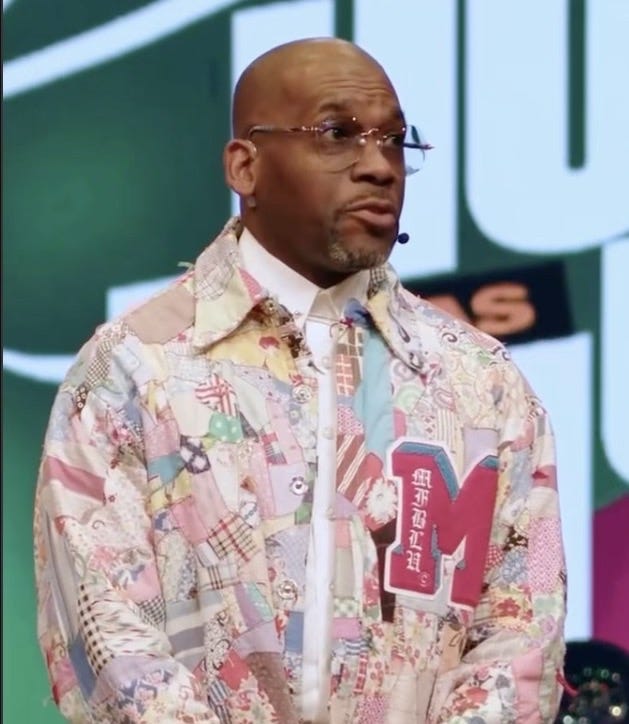
So thank you, Pastor Jamal Bryant.
Thank you to New Birth.
For choosing people over preservation.
For refusing fear as a guiding principle.
For being a light in a moment that desperately needs one.