
Identity Week 2
Jephthah | Naming What Shaped Us

This is my sermon manuscript from yesterday’s gathering at Meizon Church. I hope that it brings you some encouragement and clarity in this dark season we all find ourselves in.
Welcome friends. If you’re new, my name is Joe and I’m one of the pastors here. Before we move any further, I want us to pause and hold a moment of prayer for the people of Iran.
I think many of us are feeling complicated things all at once. We can believe this sudden march toward war is a distraction and still refuse to let it shrink our empathy for the people who live there.
We can say clearly: I do not want our young people shipped off to another forever war. We have lived that story already. We can also say plainly: the ayatollah’s regime has been cruel and oppressive. The people of Iran deserve freedom, dignity, and safety and not because they are useful to our politics, but because they are human.
I also think we can hold all of that together at the same time: Oppose war. Reject propaganda. Tell the truth about oppression. Refuse to dehumanize anyone. Multiple things can be true at the same time.
So, let’s pray. God of every nation and every frightened home, be near to those in Iran who do not know what tomorrow holds. Protect children from violence, families from grief, and ordinary people from the ambitions of powerful men. Give courage to those seeking freedom, wisdom to those with influence, and restraint to those with weapons.
And keep our own hearts from hatred, fear, and the easy lie that peace comes through destruction. May we choose compassion over pride, truth over slogans, and life over war. Amen. And so it is.
Last week we began our Lent series by sitting with the story of Hagar (a woman with no power, no protection, and no voice) and noticed that before God fixes anything, explains anything, or rescues anything, God simply sees her. In a wilderness she didn’t choose, Hagar is asked her story, called by name, and becomes the only person in scripture to give God a personal name: El Roi- the God who sees me. We wrestled with how faith can exist inside harmful systems, how truth-telling is often the first act of hope, and how our identity doesn’t begin with improvement or certainty but with being recognized. The invitation was simple but costly: refuse to pretend, tell the truth about where you are and the world you’re in, and trust that God meets us there. Which is why we said the first thing God does is see you.
And once a person begins to feel seen, something else slowly becomes possible. Not change yet, and not even healing. Just awareness. The kind of awareness that notices how much of our lives were already in motion long before we ever examined it.
Most of us live with the quiet assumption that our thoughts are simply our thoughts, and our reactions are simply who we are. But every once in a while, you notice something strange.
You react to a situation faster than you meant to. You feel guilty before you know why. You feel defensive before anyone accuses you. You feel relief when someone approves of you in a way that feels bigger than the moment deserves. And afterward you realize that reaction didn’t start today. Something in you already knew what this moment meant.
A child doesn’t evaluate the world philosophically. A child learns the world by living inside it. We learn what settles a room and what tightens it. We learn what earns warmth and what creates distance. And because belonging is survival at that stage of life, those lessons don’t feel like lessons. They feel like reality.
So, by the time we are old enough to ask why we believe what we believe, much of it no longer feels chosen. It feels obvious.
That’s why two sincere people can encounter the same situation and walk away completely certain of opposite conclusions. They’re not just responding to the moment in front of them… they’re responding to something already at work inside them.
Which leads to the center truth we’re wrestling with today: Before we chose our beliefs, our beliefs chose us.
Now that isn’t a failure, it’s how human beings survive. We inherit understanding before we’re capable of examining it. Which means a person can be incredibly sincere and still be living inside a reality they never consciously chose.
There is a story in scripture that almost never gets talked about, most likely because it doesn’t resolve cleanly and it doesn’t leave us clear heroes to imitate. It’s found in the OT book of Judges, and it centers on a man named Jephthah.
Jephthah grows up rejected, pushed out by his own family, and learns how the world works from its harsher edges. And like many people pushed to the margins, he gathers with others who survive by brute strength because that’s what keeps you alive when protection is uncertain. He becomes capable, respected, and eventually necessary. Years later, when conflict threatens the very community that once excluded him, they ask him to come back and lead them.
4 At about this time, the Ammonites began their war against Israel. 5 When the Ammonites attacked, the elders of Gilead sent for Jephthah in the land of Tob. 6 The elders said, “Come and be our commander! Help us fight the Ammonites!” Judges 11:4-6
But when he returns, he does not return unchanged. People rarely do. We carry the worlds that formed us back into the places that now need us.
Before the battle begins, Jephthah makes a vow: 30... He said, “If you give me victory over the Ammonites, 31 I will give to the Lord whatever comes out of my house to meet me when I return in triumph. I will sacrifice it as a burnt offering.”
What a dumb thing to say...right? Like, who would say something like that? But the striking thing about the moment is how unremarkable it seems to him. The text gives no hint of hesitation. He speaks as someone acting faithfully within a framework he understands. Where he came from, faith wasn’t about trust... it was about bargaining. If you wanted protection, you offered something expensive. The bigger the cost, the more sincere you were.
So, Jephthah speaks to God using the only language of devotion he has ever known.
Before we chose our beliefs, our beliefs chose us.
The God We Learned To Expect
Before the story moves forward, I want to pause for a moment, because this is the point where many people pull away from the Bible.
If you keep reading scripture long enough, you will run into passages where violence is described and attributed to God. Entire cities destroyed. Men, women, children, even animals wiped out. Rules for who could be enslaved and who couldn’t. At times even instructions about keeping young girls alive after war. These passages and moments don’t feel difficult in any kind of thoughtful way... they feel disturbing and even evil.
Many of us were taught not to linger there. Just trust it. Just move on. But most people don’t actually move on. They just learn to stop asking questions out loud.
So, let’s say the quiet part gently. If God truly commands genocide, if God requires the killing of children, if God gives permission for sexual assault, then God cannot be good. That would not be holiness... that would be terror. And most of us know that instinctively, which is why we feel the tension even if we’ve never said it.
But Christians also make another claim. We say that when we look at Jesus, we are not seeing part of God, we are seeing God clearly. The New Testament says Jesus is the full expression of God, and that God is love.
And that gives us something to ask when we read violent passages:
Would Jesus command people to slaughter entire populations?
Would Jesus be ok with those people being enslaved but not those people?
Would Jesus instruct soldiers to keep young girls for themselves?
If Jesus shows us what God has always been like, then those commands cannot be revealing God’s character. They must be revealing something about the people who believed God was like that. Which leads to a harder but more faithful possibility.
The Bible is not a single voice dropped from heaven. It is a library. Writings from many generations of people trying to understand God inside the limits of their time, their fears, their wars, and their survival. And because of that, the understanding of God grows across its pages.
There are places where God regrets creating humanity (the flood narrative). Places where God is surprised by human behavior (the tower of Babel). Places where God is portrayed as losing a battle when a king sacrifices his firstborn child (2 Kings 3:27).
Those are not descriptions of an unchanging divine nature. They are windows into people wrestling toward clarity. God did not become loving later. People slowly learned that God already was.
Ancient people were not less sincere than we are. They simply spoke about God using the moral imagination they had. Sometimes they attributed their violence to God because they could not yet imagine a God unlike themselves.
So, when we come to Jephthah, we are not reading a moment where God asks for a child’s life. We are reading a moment where a man believes God would. And I think that matters, because it helps us see the tragedy clearly. The danger in the story is not rebellion against God. It is devotion shaped by a misunderstanding of God.
Which brings us to the daughter.
The Daughter
Judges 11:34 When Jephthah returned home to Mizpah, his daughter came out to meet him, playing on a tambourine and dancing for joy. She was his one and only child; he had no other sons or daughters.
The battle ends. Jephthah returns home alive. And the first thing to come out of the house to greet him is his daughter — dancing, celebrating, unaware she is stepping into a promise she never heard.
The story slows here. She speaks to him, he explains the vow, and then she responds: 36 And she said, “Father, if you have made a vow to the Lord, you must do to me what you have vowed, for the Lord has given you a great victory over your enemies, the Ammonites. 37 But first let me do this one thing: Let me go up and roam in the hills and weep with my friends for two months, because I will die a virgin.”
Notice the text never tells us God required this. Scripture does not frame this as obedience rewarded or commanded. It records a tragedy carried out by someone convinced he is honoring God. The story will not let Jephthah become a villain. He is sincere. He believes this is what faithfulness looks like. And so does his daughter.
The damage happens not because they reject God but because their image of God has been shaped by fear and survival and culture long before he ever speaks this vow aloud.
Jephthah isn’t faithless. He is formed. And that is what makes the moment so heavy. His daughter becomes the cost of an understanding of God he never realized he inherited.
The God We Imagine
We tend to assume our picture of God comes from scripture alone. But most of us learned who God was long before we learned verses. We learned God through tone and reaction and consequences... in how adults or leaders handled our questions, in whether curiosity felt safe or dangerous, and in the posture of the voices that taught us.
Because of that, we didn’t just learn the rules. We learned what kind of relationship we were living inside. These things morphed into not just ideas about God, but expectations of God.
Without anyone saying it directly, we carried a picture of God formed less by encounter and more by atmosphere. If approval felt fragile, God became easy to disappoint. If anger felt close, God became easily offended. If love had conditions, God had conditions. If belonging could be lost, salvation could be lost. No one sat us down and explained this. We just absorbed it the way humans do.
Long before theology ever becomes conscious, it becomes embodied.
I think that’s why this story is never really talked about. Not just b/c it shocks us with ancient violence, but b/c it holds up a mirror. It shows us how we can act with complete sincerity inside assumptions we never realized were given to us. Jephthah isn’t presented as wicked. He’s presented as certain, and certainty is often what happens when something was learned early enough to feel unquestionable.
Before we chose our beliefs, our beliefs chose us.
When Violence Is Called Holy
I want to be really honest here. Unlearning these things becomes an undoing. And any undoing is hard; awful really. But if we are never willing to do these things, we will never grow past these things. We will be forever stuck within these inherited systems. I understand how heavy that can be. And while we didn’t create this, we are responsible for undoing it. That burden has fallen to us. No matter how hard it is, we cannot shy away from it. We must meet this moment head on.
We have to tell the truth about passages like this. Because what we refuse to examine, we eventually excuse. And what we excuse, we eventually repeat.
If God can be imagined as ordaining violence, then violence will always find a pulpit. Not because believers wake up wanting harm, but because faith shapes conscience. People will do almost anything, and sleep peacefully, if they believe heaven once called it righteousness.
That is exactly what we see in Jephthah’s story. A man does something horrific while believing he is faithful. No angel stops him. No prophet interrupts him. The silence forces a question: what happens when devotion is built on a misunderstanding of God?
History answers that question. A faith that sanctifies harm does not stay in ancient pages; it builds societies.
We see it when names connected to the Epstein files for sexually abusing women and children surface (including President Trump) and, instead of accountability, we get leaders protecting pedophiles.
We see it when cuts to USAID means people; we will never meet die in numbers large enough that we can’t comprehend (roughly 700,000 since the state of the union).
We see it here in Florida, when access to medication for people living with AIDS is taken away and the suffering that follows is treated as an acceptable outcome of policy.
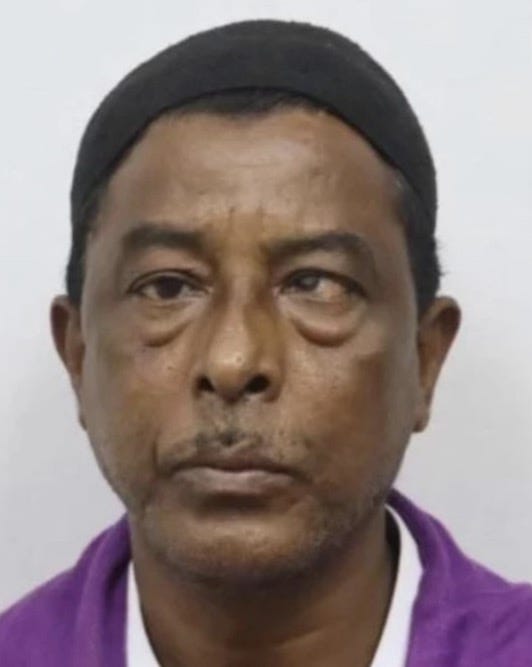
We see it when a legally blind man, 56 yr old Nurul Amin Shah Alam, is released by ICE 5 miles from home, dropped off in front of a locked restaurant, in the frigid Buffalo weather and freezes to death trying to get home.
We see it when states move to erase Juneteenth while proposing days honoring figures like Charlie Kirk, which includes renaming the street this building sits on.
None of this requires people who think they are evil. It requires people convinced the harm serves a righteous purpose. If the image of God we protect has room for domination, the vulnerable will always pay the price for preserving it.
Jesus said you know a tree by its fruit. And when fruit keeps rotting across generations, honesty demands the harder confession: something is wrong with the tree itself.
Church, the system that keeps producing this harm cannot be healed by denial. It must be named. Not to destroy faith, but to rescue it from what has been done in its name. The work of faith is not protecting a structure because it is familiar. The work of faith is telling the truth when the name of God is used to shield the powerful from accountability.
Hear me when I say this: unexamined belief does not remain private. It becomes culture. It becomes policy. It becomes what people are trained not to see.
And the moment we finally face that is not the end of faith. It is the moment faith becomes honest enough to grow again.
For the Moment We Are In
And after saying all of that, it would be easy to leave this as a story about institutions, leaders, and history. Easy to hear it as a verdict about people out there somewhere. But scripture rarely lets us keep the conversation at a safe distance.
Because the same thing that shaped systems also shaped us. None of us learned faith in a vacuum. We inherited it... which means the problem isn’t just a rotten tree we point at. It’s roots we discover we were standing in.
That isn’t a moment for shame. And it isn’t a moment for defensiveness. It’s a moment for honesty. Because once something is named, it stops having to be protected. And once it stops being protected, it can finally be understood. And once it’s understood, it no longer has to control us.
Which means the point of telling the truth about the systems that formed us is not condemnation... it’s freedom. And that’s where this turns from history to you.
The story of Jephthah matters because it refuses to give us a villain to distance ourselves from. He isn’t presented as malicious. He’s presented as certain... a man trying to be faithful using the only understanding of God he had ever been given.
And that’s what makes the story unsettling. It shows how harm can grow out of sincerity. How a person can act with total conviction while never realizing the assumptions they inherited were guiding them.
You are allowed to notice what shaped you without betraying who loved you. Because the goal is not to pretend the past didn’t form us. The goal is to become aware enough that formation no longer operates unseen... to choose what we carry forward instead of only repeating what we received.
Before we chose our beliefs, our beliefs chose us. And awareness is the moment we begin choosing back.
Invitation
So today isn’t about fixing anything. There is no quick fix or resolution. It’s just about paying attention.
This week, when those moments come, and they will, resist the urge to immediately explain them away. Stay with them for a second longer than you normally would. Instead of correcting yourself or judging yourself, just get curious about what surfaced and where it might have learned to speak. Don’t argue with it and don’t rush to reject it. Just notice it... with curiosity instead of fear.
When you feel defensive, ask what you’re protecting. When guilt shows up, listen for whose voice it sounds like. When you feel the need to prove yourself, pay attention to what you’re afraid would happen if you didn’t. You’re not trying to change yourself this week. You’re learning to see yourself.
Faith can’t grow where everything has to remain unexamined, but it grows where we’re willing to be present to what’s actually happening inside us.
And once you realize that… a question naturally follows. If these reactions were shaped in us, if these voices were handed to us, then which ones should keep speaking?
Because eventually faith asks more than what formed you. It asks who gets to name you now. Which is where we are going.
This week we notice the voices.
Next week we decide which ones we trust.
If you’re new, I end each gathering with a time of observation and reflection. I do that to allow you the time to listen to your body and to listen to the spirit. The band is playing so it’s not an awkward silence. Lights will be turned down to help create intimacy and I will ask a few questions to guide that process. So, just like we began our gathering, I invite you to close your eyes and take a few deep breaths. Allow yourself to be drawn into this moment.
Reflection Questions
When you picture God reacting to you, what tone or posture do you instinctively imagine — and where might you have learned it?
What belief about yourself or the world has always felt “obvious” to you, and what experiences may have taught it?
Are there reactions in your life that feel automatic, especially around fear, approval, or belonging? What might have shaped them?
If awareness is the first step toward freedom, what would it look like this week to gently notice rather than immediately judge what you discover?
God Who Sees and Tells the Truth,
You have watched us learn faith before we understood it… in tone, in silence, in approval and fear. You know the stories that formed us and the images of you we carried without choosing.
Give us courage to look honestly at what shaped us. Where fear has spoken in your name, quiet it. Where loyalty to systems has replaced love of people, correct us. Teach us to recognize your voice… the one that does not coerce, does not threaten, and does not require harm to prove devotion.
As we begin to notice the voices within us, make us brave enough to question them and patient enough not to hate ourselves for having learned them. Lead us into a faith that is honest and alive.
Give us eyes to see and ears to hear. Bring comfort to the afflicted, healing to the broken and freedom to the chained. We pray in the name of Jesus, the One who refused every false voice in the wilderness, Amen. And so it is.
Holding complexity like this takes courage. Opposing war while refusing to dehumanize anyone is not weakness — it’s moral clarity. “Multiple things can be true at the same time” feels especially needed right now.