
Identity Week 1
Hagar

This is my sermon manuscript from yesterday’s gathering at Meizon Church. I hope that it brings you some encouragement and clarity in this dark season we all find ourselves in.
Welcome everyone. If you’re new, my name is Joe. I’m one of the pastors here. It’s good to see your faces. We are kicking off our Lent series called Identity.
For those of you like me who have no idea what Lent is- it is the 40 days before easter where we take time to remember and reflect on our own mortality. Lent is a season of contemplation.
During this time the church has always said, remember that you are dust and to dust you will return. But that was never meant as an insult to your existence — it was a reminder of your origin.
This is what I told everyone at our Ash Wednesday service- Dust is not just the symbol of death. Dust is the material of creation. Genesis says God formed humanity from the dust of the ground and breathed life into it — not away from the earth, but from it. The same substance that receives our bodies in death once held us in birth.
Which means dust is not the opposite of life. Dust is the condition for life.
Every garden grows in it. Every forest roots in it. Everything living rises from what has already died. Even our bodies are made of borrowed atoms from ancient stars and long-fallen creatures and forgotten generations. The world is full of resurrections we call ordinary.
So Lent is not about pretending we are less human. It is about becoming honest about being human — grounded, finite, fragile, and still breathed into by God.
Which leads us into one of the core claims at the center of Christianity is that identity doesn’t begin with effort or improvement or certainty. It begins earlier than that. Which is why the truth we will focus on today is this: The first thing God does is see you.
This morning, we’re sitting with a story many people never hear preached, but it may be one of the most important identity stories in the Bible… the story of Hagar.
The Family You Weren’t Meant to Be In
To understand Hagar, you need to understand the family she lives in. Abram and Sarai (later Abraham and Sarah) have been promised by God that their family will grow into a great people (Genesis 12). But years pass and nothing happens. They age. Still no child. In the ancient world that wasn’t just emotional pain; it meant something was wrong with you and specifically the woman. So, Sarai decides to solve the problem herself.
Genesis says, “Sarai, Abram’s wife, had borne him no children. She had an Egyptian slave-girl whose name was Hagar, and Sarai said to Abram, ‘Go in to my slave-girl; it may be that I shall obtain children by her’” (Genesis 16:1–2).
We need to pause here for a moment and see that Hagar’s life is already mostly decided for her before the story even begins. She is Egyptian, which likely means she was taken when Abram’s household left Egypt earlier in the story. She is enslaved, which means she does not control her labor, her future, or her body. And now she is given to and taken by Abram to produce a child that will legally belong to someone else. Let’s not sugarcoat this… Hagar is a trafficked woman.
In that culture, the arrangement was normal. Which is exactly what makes it hard to look at. Because something can be accepted and still be unjust.
Abram and Sarai are not written as villains here. They are people trying to hold onto a promise while living inside the only social system they understand. But they are also participating in a system where power decides what happens to someone else’s body. The text does not stop to explain it away or soften it. It simply tells the story and lets us feel it.
Back to the story- She becomes pregnant, and suddenly the fragile emotional balance in the household cracks. The text says, “When she saw that she had conceived, she looked with contempt on her mistress… Then Sarai dealt harshly with her, and she fled from her” (Genesis 16:4, 6). That word harshly means oppression… not an awkward tension or being passive aggressive, but real mistreatment.
Sarai feels displaced and ashamed. Abram stays out of it. And instead of questioning the system that created the situation, the pressure moves downward toward the person with the least power in the house.
That part feels painfully familiar.
Not because these were uniquely bad people, but because good people can live comfortably inside harmful systems when those systems feel ordinary to them. The story doesn’t invite us to stand above them and judge. It invites us to notice how easily faith and injustice can coexist when no one stops to ask who is paying the cost.
So, Hagar runs. She has no plans, no provisions, no safe destination. She just ran… right into the wilderness.
The Wilderness
In scripture, the wilderness is the edge of survival. It’s a place where illusions fall apart because they have to. We have our own versions of it. Seasons where the future won’t cooperate with our plans, when relationships break, when faith goes quiet.
But Hagar isn’t just having an inner struggle. She is a pregnant runaway enslaved woman walking into open desert. The wilderness for her is not poetic. It is a place where people die. Which makes what happens next matter even more.
Genesis says, “The angel of the Lord found her by a spring of water in the wilderness” (Genesis 16:7).
In the most dangerous moment of her life, before anything is resolved, God’s movement toward her is simple recognition. She is seen in a place where no one was looking for her. God does not wait for her to locate the holy. God locates her. The first thing God does is see you.
A Question, Not a Command
What happens next in the story is so beautiful I can barely make it through without getting emotional and it’s so quiet you almost miss how radical it is.
“The angel of the Lord said to her, ‘Hagar, slave-girl of Sarai, where have you come from and where are you going?’” (Genesis 16:8).
Those are the first words.
Not a correction.
Not a sermon.
Not even comfort yet.
A question.
You might be asking, “Joe...why is that so beautiful and radical? Here’s why: The question is not gathering information. It is giving something back to her that has been taken away; personhood. For the entire story up to this point Hagar has been spoken about, spoken over, and spoken for. She has been transferred, used, blamed, and pushed out. Nobody has asked her anything. Nobody has wondered what her life feels like from inside her own body. Then God does.
Where have you come from? Where are you going? In other words: your story matters enough to be told.
Not just that... God says her name first. Hagar. Not slave. Not solution. Not problem. Her name is spoken in a place where she expected to disappear.
The first thing God does is see you.
And she answers honestly: “I am running away from my mistress Sarai” (Genesis 16:8).
Notice what she doesn’t do here. There’s no spiritual language. No attempt to sound faithful. No pretending she’s fine. Just truth. She doesn’t clean it up for God. She doesn’t justify herself. She doesn’t hide the conflict. She tells the truth about her pain.
Then God tells her she will have a son and to name him Ishmael, which means God hears, “for the Lord has given heed to your affliction” (Genesis 16:11).
God responds to suffering that is still happening. She is not recognized after rescue. She is recognized inside it. And that small detail changes the tone of the entire story. Because this is not a God who only meets people once their lives make sense. This is a God who meets a terrified pregnant woman sitting in the desert beside a trickle of water and treats her like her life is worth stopping the universe for.
Church, please hear me: The first thing God does is see you.
The Only Person Who Names God
As if that’ s not beautiful enough, the story does something almost unbelievable.
Hagar names God.
“So she named the Lord who spoke to her, ‘You are El Roi,’ for she said, ‘Have I really seen God and remained alive after seeing him?’” (Genesis 16:13).
In the ancient world, naming carried weight. Names described character. They revealed how someone had been experienced. Throughout scripture people build altars, write songs, and tell stories about God but almost no one looks God in the face and gives God a personal name born out of their own encounter.
And the only person in the Bible who does this is not Abraham, not Moses, not a king, not a prophet. It’s a runaway enslaved woman sitting in the desert. If you don’t hear anything all morning, hear this:
She doesn’t call God powerful.
She doesn’t call God judge.
She doesn’t call God overwhelming.
She calls God the one who sees me.
Not the God who fixed everything.
Not the God who explained everything.
The God who saw.
And somehow this moment survived centuries of telling and retelling the story. Generation after generation preserved the memory that the first person in scripture to name God was a woman without status, without protection, without voice and the name she gave God was not about fear but about attention.
That is breathtaking.
Because at the lowest point of her life, invisible to everyone who had defined her existence, God pays attention long enough for her to realize she has not disappeared. She is still a person. Still alive. Still here. The first thing God does is see you.
God meets Hagar before anything is resolved. Before her circumstances improved. Before the household heals. Before justice arrives. Her identity is not built out of success or stability but out of encounter. She is seen before she is secure.
Which is why Lent begins not with achievement but with ashes. They do not say try harder. They say you are human and still wanted.
In a season where many people feel worn thin by grief, by uncertainty, by the weight of the world, Lent does not start by asking you to become someone else. It starts by telling you that before anything changes, before anything is solved, before you even know where you are going, you are already seen.
The first thing God does is see you.
For This Season We’re In
Being seen by God doesn’t just comfort a person, it gives them the courage to stop pretending.
Hagar’s story forces us to confront something uncomfortable. The harm in this passage doesn’t happen outside faith. It happens inside a household trying to live out God’s promise. Everyone believes they are being faithful and someone is still crushed.
That is not just ancient history.
This is a pastor named Doug Wilson (Show Picture) who leads a network of churches called the Communion of Reformed Evangelical Churches. His teachings have shaped communities where authority is treated as righteousness, where questioning leadership is framed as rebellion, and where families have described spiritual control, coerced relationships, abuse of women and children occur on a regular basis and that abuse is handled internally to protect the reputation of the church.

Tonight, survivors from those churches will speak publicly on CNN’s “The Whole Story: The Rise of Christian Nationalism” (The show was postponed due to coverage of a weather event). One of them is my friend Margaret Bronson, who grew up inside the cult and had to construct an elaborate escape just to leave safely. Now she spends her life helping others do the same.
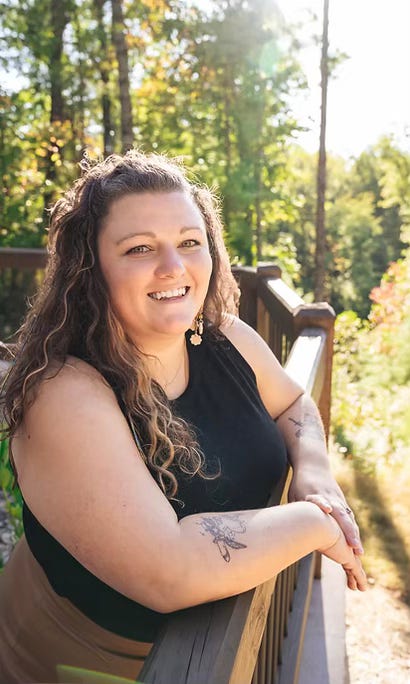
I want to say this plainly: When people must plan to escape instead of simply leaving, something profoundly unchristian is happening.
And this is not just about one congregation in one town. Ideas travel. Theology travels. Power travels. Doug Wilson preached at the Pentagon this week because people in positions of national influence believe this vision of iron fisted authority reflects Christian order.
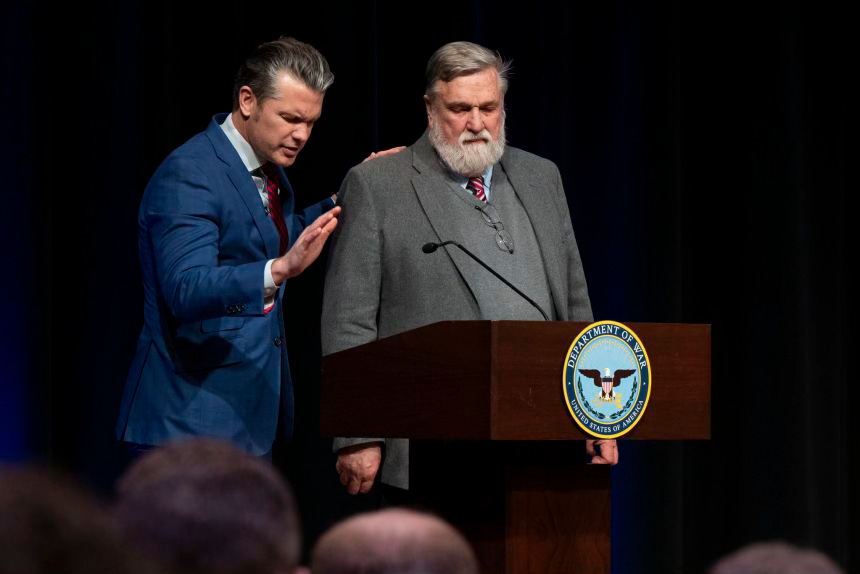
That makes this a church issue and a public one.
Now hear me carefully: the problem is not that the church has broken people in it. The problem is when the church protects systems that require silence to survive. And that is exactly why the Bible tells Hagar’s story the way it does. Scripture does not protect the reputation of the household. Scripture preserves the voice of the person harmed.
So, to any pastors and church leaders ( elders, board members, ministry directors) that may hear this, this moment asks something of us.
We are where we are because too many of us were afraid to call this what it is. We softened it. We rebranded around it. We told ourselves being the welcoming church, the reasonable church, the cool church mattered more than being the truthful church.
We traded a prophetic calling for platforms, for access, for making sure our donors never felt discomfort. And every time the church chooses reputation over truth, someone pays for that comfort with their safety.
When people tell the truth about harm in religious spaces, our job is not to manage the fallout or protect the institution. Our job is to stand in the light of truth with them. Because naming harm is not attacking the church… silence is what has been wounding it.
And here is the part we cannot avoid: in the Hagar story, the faithful person is not the patriarch, not the matriarch, not the household built around God’s promise. The faithful person is the exploited girl who refuses to lie about what happened to her. Scripture does not defend the powerful. It records her voice.
Hagar tells the cold hard truth about the harm done to her, and in being seen she comes to name God not because the situation was fixed, not because justice arrived, but because the place of truth is where God had already met her.
If the church wants to be where God is, then we do not get to protect comforting stories. We tell the truth plainly, publicly, and without sanding off the edges, especially when it costs us.
So here’s the invitation this week: Refuse to pretend the wilderness is safer than it is. Tell the truth about what you see, even when it costs belonging, and trust that honesty does not push God away. It is often the place God meets us first.
Sometimes hope doesn’t begin with rescue. Sometimes hope begins with being located. The first thing God does, is see you.
Which is where this story naturally leads us next week. Because once you know that the first thing God does is see you, you can finally begin asking which voices have been shaping your identity all along… and which ones no longer get to.
If you’re new, I end each gathering with a time of observation and reflection. I do that to allow you the time to listen to your body and to listen to the spirit. The band is playing so it’s not an awkward silence. Lights will be turned down to help create intimacy and I will ask a few questions to guide that process. So, just like we began our gathering, I invite you to close your eyes and take a few deep breaths. Allow yourself to be drawn into this moment.
Where in your life right now do you feel most unseen or overlooked and what would it mean to imagine God noticing you there?
Hagar told the truth about her situation without cleaning it up. What truth about your life or the world have you been avoiding naming out loud?
What wilderness are you walking through right now, and how might recognizing that God meets you there change the way you carry it?
If “the first thing God does is see you,” how might that change the way you face this week especially in places that feel uncertain or heavy?
God who sees us,
You meet us in places we didn’t plan to be… in the moments when life feels exposed, uncertain, and harder than we expected. You find us in the wilderness, not after we’ve figured it out, not after we’ve said the right words, but while we are still telling the truth about how tired we are.
Some of us feel strong today. Many of us don’t. Some of us are hopeful. Others are carrying quiet fear, grief, anger, or numbness. You see all of it. Nothing in us has to be hidden for You to stay near.
Give us the courage Hagar had… the courage to name what is real without pretending it is smaller than it is. Where harm exists, help us refuse denial. Where we are tempted to look away, help us keep our eyes open. Where the weight of the world feels overwhelming, remind us that being seen is the beginning of hope.
Let this truth settle into us this week: before we change anything, before we fix anything, before we even understand what comes next, You have already found us.
So steady us in that belonging.
Quiet the fear that we are alone.
And teach us to live as people who know they are held.
We pray in the name of Christ… the one who enters our wilderness, calls the unseen by name, and showed us the face of the God who sees.
Amen. And so it is.
I was raised in the church for 20 years and never got as much out of the Bible as I have from your substack and Instagram. it never felt real, honest or relevant. I wonder if that’s because it was always used to attack and control the powerless instead of confront and hold accountable the powerful. Including church leadership. thank you, joe